





SKIN CONCERNS & SOLUTIONS
OILY & ACNE PRONE SKIN
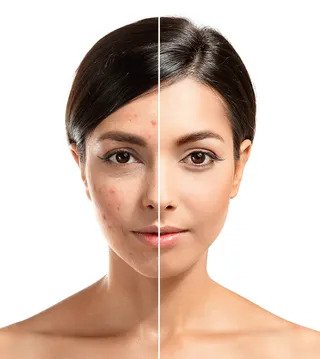
Is characterised by over-active sebaceous glands that produce a visible oily or shiny film on the surface of the skin. This has an impact on the skin’s acid mantle or PH and slows down surface cell turnover which, in turn, leads to cell build up and congestion. The complexion tends to appear sallow and heavy. Oily skin can lead to various secondary skin conditions, the most common and distressing being acne.
Acne Vulgaris is a hormonal condition commonly affecting both male and female teenagers and becoming increasingly common at all ages due to both hormonal and environmental factors. The Male androgen or sex hormones (Dihydrotestosterone) effect sebaceous secretions. A raised level of hormones leads to increased sebaceous secretions that begin to clog the sebaceous gland. The sebum contains triglycerides that the P Acnes bacteria (present on the skin’s surface) breaks down into glycerol and free fatty acids.
Suitable Skincare products can be prescribed during the skin health consultation.
The P-Acnes Bacteria feed on the glycerol, multiply and over populate while the free fatty acids cause the lining of the sebaceous gland to thicken. This aggravates the sebum build up as the follicle duct and opening narrows causing it to become completely blocked with dead, hardened skin cells. These blocked ducts appear as ‘blackheads’ when the surface is visible because the sebum darkens in reaction to the oxygen in the air. “White heads” form when the duct is closed and the build-up of dead cells look like white bumps under the surface of the skin.
‘Pustules’ and ‘Papules’, more commonly known as ‘pimples’ form when these blocked ducts become infected by the surface bacteria. Acne is graded by the level of infection present. More severe forms of Acne require medical intervention and prescription medicine; however, Acne Grades 1 & 2 can be effectively treated with aesthetic treatments.
The golden rule to be followed, however, is to resist the temptation to squeeze pimples. This damages the follicular wall and causes scarring. If the infected sebum seeps in to the tissue this can lead to inflammation and the formation of cysts.
A common misconception is treating the odd ‘spot’ like acne. All of us get the odd spot or blemish owing to hormonal cycles, changes in diet or extrinsic factors such as the use of skincare products that upset the PH of the skin by stripping away essential oils. The best way to deal with occasional spots is to look at any changes in life style, dietary or skincare habits. It is important to work towards restoring the acid mantle of the skin by using non-soapy cleansers with the right PH, adding hydration with topical application of humectants (water retaining) such as hyaluronic acid and glycerol, making sure you are not using any pore clogging make up and maintaining a well-balanced diet.
MATURE & AGEING SKIN
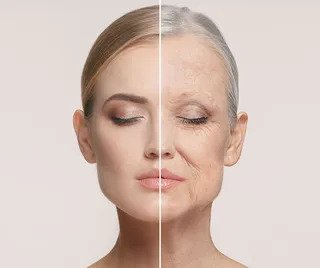
One of the most common skin concerns for clients seeking skin rejuvenation treatments is Mature and Ageing Skin. The onset of lines, wrinkles and skin laxity can be due to the body’s natural ageing process or it could be brought on prematurely by extrinsic environmental and lifestyle factors.
The physical ageing process of skin begins around the age of 25 after which Elastin fibres stop being produced. Cell renewal and regeneration slows down causing skin lipidity and hydration levels to fall. This may also be accompanied with hormonal changes in females as hydration levels plummet with a drop-in oestrogen levels. Around the early 30’s and more excessively after menopause the level of oestrogen in the female body drops. This causes a loss of water and water retaining hyaluronic acid in the skin.
The skin starts to show lines and wrinkles which deepen as the contours beneath the skin start to alter. The connectivity between the epidermal and dermal layers of the skin starts to degrade causing further slackening of the skin.
Suitable Skincare products can be prescribed during the skin health consultation.
One of the main extrinsic factors for premature ageing is free radical damage by environmental factors such as UV damage, alcohol, smoking, too much exercise, stress, medication and poor diet. These factors cause early cell death, cell mutation, pigmentation irregularities and the appearance of age lines.
The good news is that we don’t have to live with these signs of ageing skin. We can improve the visible signs of ageing immensely by using the right skincare products and having preventative and corrective aesthetic treatments.
DRY SKIN – DEHYDRATED AND/OR LIPID DRY
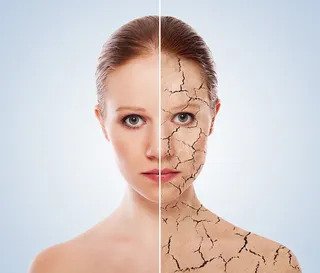
A ‘dry’ skin condition and ‘dehydrated’ skin is commonly confused. Very simply put, ‘dry’ skin refers to the lack of oils in the skin and ‘dehydrated’ skin refers to the lack of ‘water’ in the skin.
DEHYDRATED SKIN
All skin types whether oily, dry or sensitive can become dehydrated. This can be due to both intrinsic and extrinsic factors. An insufficient water intake, the loss of water from the skin through transepidermal water loss, harsh weather conditions and being in central heating or air conditioning can all contribute.
Dehydrated skin appears dry and may show lines much like a shrivelled-up fruit. Typical signs include a dry texture with fine lines and associated dry, sore patches. There will also be a build-up of dead skin cells as desquamation or the shedding of the surface skin cells slows down.
DRY SKIN
A lipid dry skin condition, also known as Asteatosis is characterised by insufficient oil secretions to keep the skin supple. Several causes can affect oil secretions in the skin. It may be an inherited condition, hormonal irregularities may affect sebum production levels, the diet may be deficient in healthy fatty acids such as omega oils. Various skin conditions such as Ichthyosis, Psoriasis and Eczema can all affect sebum production.
The skin is visibly taut and dry, sometimes even flaky. It is thin and fine textured. Lipid dryness can also lead to increased sensitivity as irritants penetrate the skin more easily. Insufficient lipids also cause the skin to age prematurely and fine lines and wrinkles tend to appear in younger skins. Vascular conditions and broken capillaries can also appear. Another common dry skin condition is the formation of ‘Milia’ or small pearly bumps around the eye area.
The Skin’s Natural Barrier Function
While trying to correct or treat either of the two conditions it is important to understand that both dehydrated skin and dry skin affect the skin’s natural barrier function by causing an imbalance in the skin’s natural PH or acidity level. All enzymatic activity in the skin takes place efficiently in the presence of water and an optimum PH.
The skin provides protection by forming both a physical and a chemical barrier to the outside world.
The Physical Barrier is formed by the hardened epidermal cells on the surface of the skin along with the skin’s Lipid or Oil secretions that come together much like cement and bricks to form a wall. This prevents a two- way flow; unwanted substances can’t enter the skin and the skin’s natural water stores, known as the Natural Moisturising Factor can’t leave the skin. The lipid level in the skin therefore helps to retain the hydration level by preventing trans epidermal water loss. In this way, a low level of natural oils in the skin can eventually lead to dehydrated skin.
The Chemical Barrier, on the other hand, refers to the ‘Acid Mantle’ of the skin. This provides the optimum PH or acidity level of approximately 5.5 to maintain the eco flora and an anti-microbial surface. The sebaceous secretions, sweat, natural moisturising factor and epidermal lipids all help to maintain the chemical barrier function.
Both oil and water are therefore essential in maintaining healthy skin and the optimum PH level.
Some conditions such as flaky, parched skin, hyper keratinization i.e. the build-up of dead skin cells and a dull sallow complexion can instantly be recognised as resulting from an impaired barrier. Sometimes, the natural barrier function might only be mildly impaired. This causes annoying blotchiness or an uneven skin tone- typically when you can’t seem to figure out what is wrong with your skin – work towards rebalancing the barrier, use a gentle cleanser, exfoliate with alpha hydroxy acids and add hydration, you will find your skin will regain a healthier look!
SENSITIVE SKIN
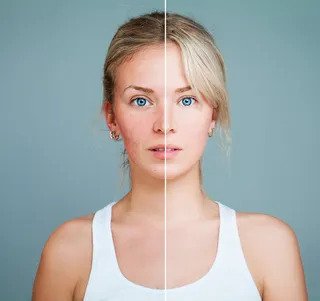
As the name suggests, sensitive skin can be highly reactive. Both external irritants and internal changes can initiate the inflammatory cascade in the skin causing vasodilation (expansion of the capillaries) and surface redness or flushing. Histamine release can cause uncomfortable sensations such as burning and itching. The sensitivity can be genetic or brought on by a number of factors such as prolonged exposure to chemicals and harsh skincare products.
Prolonged dehydration and dryness can also lead to skin sensitivity. The skin can react to products and treatments or environmental changes such as pollution, heat, cold and the use of cosmetics. Internal changes such as stress or hormonal imbalances can also cause skin sensitivity. Sensitive skin tends to have erythematic tendencies, it may show signs of Telangiectasia (broken capillaries) because of frequent vasodilation and it will appear fine textured and often be a dry skin type.
Rosacea: is a condition common associated with sensitive skin. It is characterized by a flushing of the skin in a very typical butterfly pattern around the nose and the cheeks. The flushing is caused by a predisposed sensitivity that results in vasodilation or the expansion of blood capillaries in the affected areas. This can be caused by several factors such as extreme temperatures, alcohol, sunlight, harsh skincare products, spicy food and stress. There are different types of Rosacea; in some cases, the skin may appear red, dry and flaky and in more severe cases it may have associated with Papules and Pustules (pimples / spots).
As with Acne Vulgaris, Rosacea can be successfully treated with Peel treatments and Micro needling. These treatments help to reduce inflammation by boosting skin renewal and strengthening the capillary network. However, where the Rosacea is more severe and or active, it is better treated with a medical prescription.
Suitable Skincare products can be prescribed during the skin health consultation.
HYPERPIGMENTATION AND SUN DAMAGE
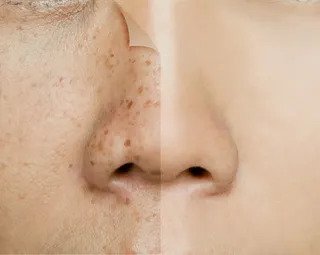
Pigmentation is the appearance of darkened areas of skin. These may appear in the form of freckles or larger and darker areas such as Melasma or Solar Lentigines. This is another very common skin concern that troubles most people because melanocytes (the colour producing cells in the skin) are extremely sensitive to changes.
Some common causes are sun damage, hormonal changes, medication that makes the skin more sensitive to the sun, skin treatments that sensitise the skin. Even the use of aerosol deodorants and perfume can cause darkened patches on the skin.
Melanocytes produce melanin when they absorb harmful UV light and neutralise it to protect the skin from premature ageing caused by sun damage. UV light and other triggers can cause over stimulation of these cells which leads to the formation of pigmentation patches as the melanin pigment produced reaches the surface skin cells.
In very general terms, lighter skin colours are more likely to get pigmentation from sun damage while darker skin colours tend to have more Post Inflammatory Hyperpigmentation after treatments. Therefore, it’s important for everyone to use sun protection always and for clients with darker skins to follow skin preparation guidelines to prevent any post-inflammatory hyper pigmentation.
Despite the various underlying causes of pigmentation, it would mostly be treated in the same way. However, how effective the treatment is will largely depend on how deep the pigmentation lies in the skin. It is also useful to note that pigmentation arising from a genetic disposition and hormonal issues may only be ‘improved’ with treatments. Pigmentation that has completely disappeared from treatment may even re-appear.